
 Are Your Hormones in Sync with Your Body?
If you’ve ever felt like you’re eating well, exercising regularly, and doing “everything right” — yet the weight refuses to budge — your hormones might be quietly sabotaging your efforts. These tiny chemical messengers influence every aspect of weight management: how hungry you feel, how quickly you burn calories, where you store fat, and even your energy and mood.
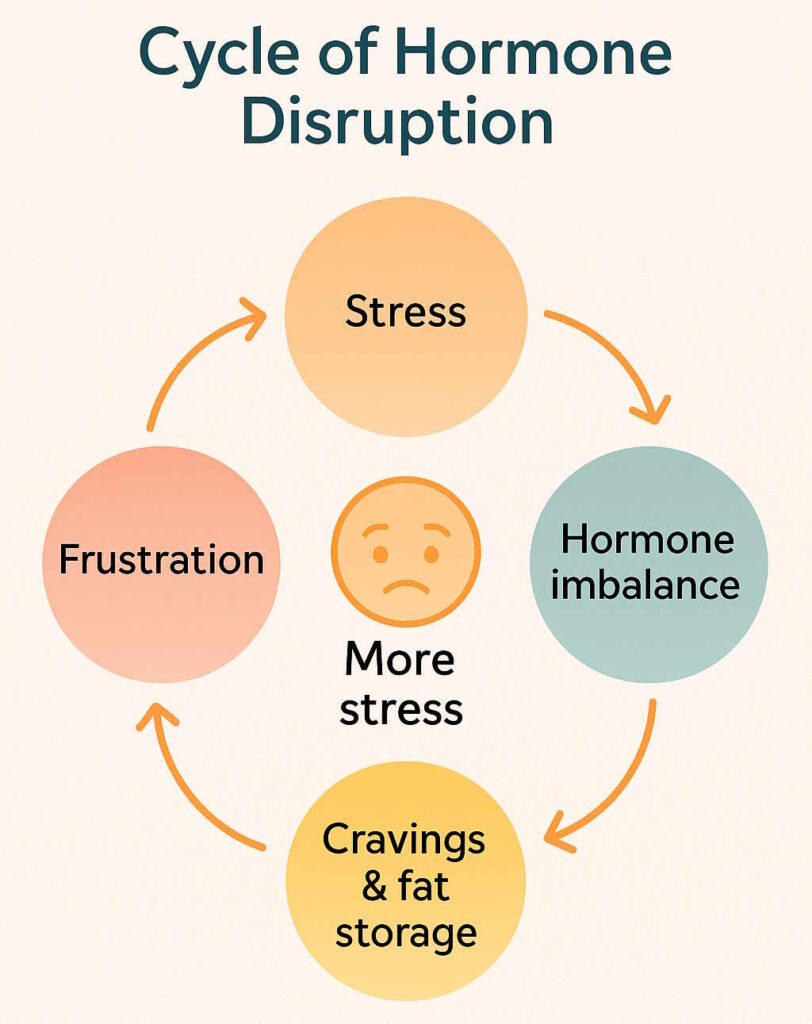
When your hormones are in balance, your body works with you. But when they’re out of sync — due to stress, nutrient deficiencies, environmental toxins, ageing, or health conditions — it can feel like you’re pushing against a locked door.
Key Hormones That Influence Weight
- Insulin – Produced by the pancreas, insulin helps regulate blood sugar. Consistently high insulin levels (often caused by excess refined carbs or insulin resistance) keep fat locked away in storage, making weight loss more difficult (Harvard T.H. Chan School of Public Health, Diabetes UK).
- Leptin – The “satiety hormone” that signals fullness. In leptin resistance, the brain doesn’t receive this signal, leading to constant hunger and overeating (Yale Scientific, NCBI).
- Ghrelin – Known as the “hunger hormone,” ghrelin rises before meals and drops after eating. Dieting for long periods can increase ghrelin, making it harder to stick to healthy habits (PubMed).
- Cortisol – Released during stress, cortisol in short bursts is helpful. But when it’s constantly elevated, it promotes belly fat storage, raises blood sugar, and can break down muscle (Cleveland Clinic).
- Thyroid hormones (T3, T4) – Regulate metabolism and energy production. Low thyroid function can slow calorie burn and lead to weight gain (British Thyroid Foundation, American Thyroid Association).
- Oestrogen & Progesterone – Fluctuations during PMS, perimenopause, and menopause affect cravings, mood, and fat distribution (The Menopause Charity).
Everyday Hormone Disruptors
Your hormones can also be thrown off by chemicals called endocrine disruptors. These include:
- BPA (found in plastics and food can linings)
- Phthalates (in cosmetics and fragrances)
- Pesticides (in non-organic produce)
- Parabens (in skincare and cleaning products) These substances can mimic, block, or interfere with natural hormone activity (Endocrine Society, Environmental Working Group).
Signs Your Hormones May Be Out of Balance
- Constant hunger despite eating enough
- Difficulty losing weight even with diet and exercise
- Fatigue and brain fog
- Irregular periods or menopausal symptoms
- Mood swings, anxiety, or depression
- Belly fat that won’t shift
Natural Ways to Support Hormonal Balance
- Pair protein, fibre, and healthy fats at each meal to stabilise blood sugar.
- Add omega-3-rich foods like oily fish, flaxseeds, or walnuts for hormone production.
- Eat cruciferous vegetables (broccoli, cauliflower, kale) to help the liver process excess hormones.
- Reduce plastic use; store food in glass or stainless steel.
- Choose organic produce where possible to reduce pesticide exposure.
- Get 7–9 hours of restorative sleep for hormonal repair.
- Manage stress with gentle movement, meditation, or nature time.
- For women, sync nutrition and exercise with menstrual cycle phases to work with natural hormonal changes.
If you want to learn more about hormone health, check articles by Dr. Sara Gottfried, Dr. Jolene Brighten, Aviva Romm, MD, and Chris Kresser.
The Takeaway
If you’ve been struggling with weight despite your best efforts, it’s not that you’re lazy or broken — your hormones may simply need a little TLC. By working with your body instead of against it, you can restore balance and make weight loss feel less like a battle.
In my practice, I see powerful changes when people combine gentle lifestyle shifts with detox support. That’s why my Far Infrared Mineral Weight Loss Wrap Course teaches how to reduce the toxic load while improving mineral balance to help with mineral deficiencies, which in turn contributes to hormone balance. You’ll learn step-by-step how to support your body in a way that’s safe, nurturing, and effective.

