
 The Surprising Link Between Gut Health and Weight Loss
If you’ve ever felt like your appetite has a mind of its own… you’re not wrong. That “mind” might just be in your gut and its microbiome.
For years, weight loss advice focused on willpower, calorie counting, and exercise. But new science tells a more nuanced story: gut health and weight loss are deeply connected. The trillions of bacteria in your digestive system may influence your cravings, energy, mood, and fat storage more than you ever imagined.
When it comes to gut health and weight loss, science is showing us that the two are deeply connected — more than most people realise. Let’s explore how the balance (or imbalance) of your gut microbes could be steering your weight loss journey, for better or worse.
Meet Your Microbiome: The Ecosystem Within
Your gut isn’t just a digestive tract. It’s home to an entire ecosystem of bacteria, yeasts, and other microbes that:
- Digest fibre and produce short-chain fatty acids
- Influence how many calories you extract from food
- Regulate hormones related to appetite (like ghrelin and leptin)
- Communicate directly with your brain through the gut-brain axis
- Help manage inflammation and immunity
Supporting gut health and weight loss starts with understanding that your microbiome is an active player in everything from calorie absorption to hormone regulation.
When this delicate balance is disrupted — a condition called dysbiosis — it can lead to all sorts of issues, from digestive problems to mood swings, sugar cravings, and stubborn weight gain.
Harvard Health – The Gut-Brain Connection
https://www.health.harvard.edu/diseases-and-conditions/the-gut-brain-connection
Gut-Brain Axis: The Hidden Driver of Your Appetite
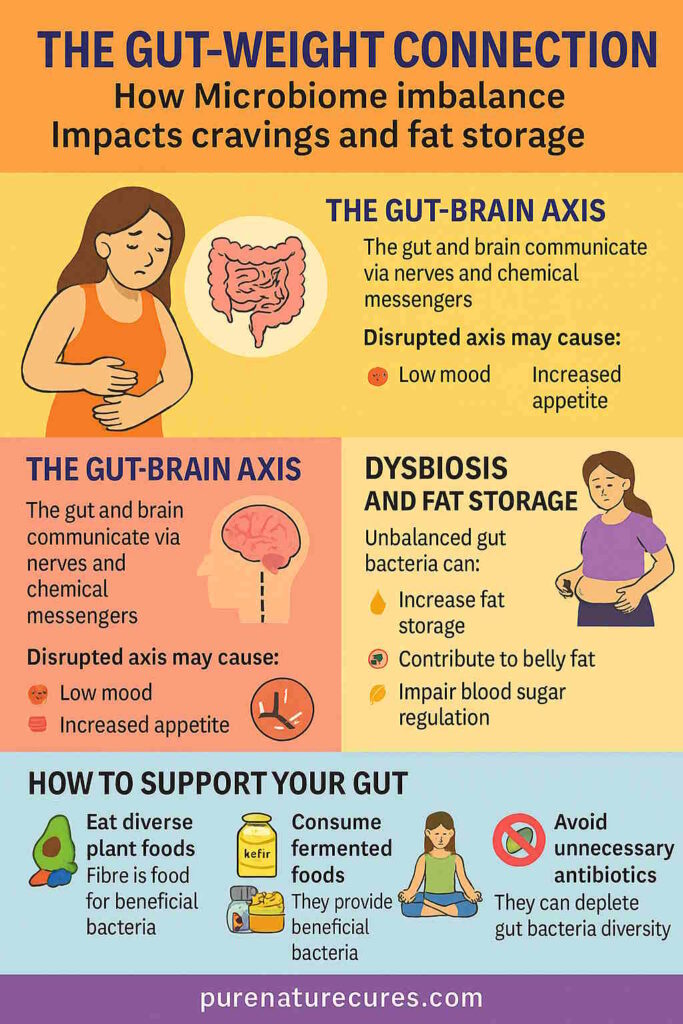
Have you ever had a gut feeling? Or felt butterflies before a stressful event? That’s the gut-brain axis in action — the two-way communication system between your digestive system and your brain, connected via the vagus nerve.
Your gut bacteria play a key role in this relationship. They help produce and regulate neurotransmitters like:
- Serotonin (mood stabiliser)
- Dopamine (motivation and reward)
- GABA (calm and relaxation)
An imbalanced gut can result in low mood, increased stress, and cravings for quick fixes like sugar or refined carbs — a biological attempt to self-soothe. In this state, your appetite regulation becomes disrupted, and you may eat more than your body needs without even realising why.
Fascinating read: Scientific American – Gut bacteria and cravings
Dysbiosis and Metabolic Health
A diverse gut microbiome helps you regulate blood sugar, reduce inflammation, and even improve insulin sensitivity. But when harmful bacteria start to outnumber the beneficial ones (dysbiosis), problems start to arise.
Research has shown that:
- People with obesity often have lower microbial diversity
- Dysbiosis can increase fat storage, especially around the belly
- Certain microbes extract more calories from the same amount of food (Nature study)
- Low diversity is linked to metabolic syndrome, a cluster of conditions including high blood pressure, insulin resistance, and high cholesterol –
- Studies from the NIH confirm the strong link between gut microbial diversity, inflammation, and obesity-related conditions.
This means your gut microbiome isn’t just about digestion — it can literally affect how your body stores and burns fat. If you’re struggling with belly fat or metabolic issues, it might be time to explore the gut health and weight loss connection.
Sugar Cravings, Mood Swings, and Gut Imbalance
If you constantly crave sugar or carbs — even when you’re not hungry — your gut bacteria may be part of the reason.
Certain microbes feed on sugar, and when they dominate the gut, they can send signals that increase your cravings. It’s a cycle:
- You eat sugar
- Bad bacteria thrive
- They send signals for more sugar
- You get more cravings
Low microbial diversity has also been linked to depression and anxiety, which can lead to emotional eating and comfort food choices, further feeding the imbalance.
Suggested read: Psychology Today – Gut health and mood
How to Feed a Happy, Balanced Gut
A diverse, well-fed microbiome isn’t just good for digestion — it’s one of the most effective natural strategies to support gut health and weight loss. Luckily, you can shape your gut microbiome through food and lifestyle — no pills required. Here’s how:
1. Eat More Plant-Based Variety
Aim for at least 30 different plant foods per week — fruits, vegetables, whole grains, legumes, nuts, and seeds. Fibre is the favourite food of good bacteria!
Need ideas? See: ZOE’s plant diversity guide
2. Add Fermented Foods
Fermented foods contain beneficial bacteria that help poulate the gut. Try:
- Sauerkraut
- Kimchi
- Plain kefir or yoghurt (unsweetened)
- Miso
- Tempeh
3. Avoid Artificial Sweeteners
While artificial sweeteners like aspartame, sucralose, and saccharin are marketed as “diet-friendly,” research shows they may actually disrupt your gut microbiome — the very system that influences cravings, metabolism, and fat storage. These sweeteners can reduce microbial diversity, promote dysbiosis, and even impair glucose tolerance. That means they may work against your gut health and weight loss goals, not for them. If you’re looking to nourish your microbiome and support sustainable fat loss, it’s best to skip artificial sweeteners and choose natural alternatives like stevia or monk fruit in moderation — or better yet, retrain your taste buds to enjoy less sweetness overall.
4. Cut Back on Antibiotics and Processed Foods
Whenever possible, avoid unnecessary antibiotics and limit ultra-processed foods — both of which can damage the microbiome. Antibiotics can disrupt the balance of your gut microbiome by killing off both harmful and beneficial bacteria. Processed foods — full of additives, refined sugars, and unhealthy fats — also feed the wrong microbes. Over time, this imbalance can affect digestion, increase cravings, and make weight loss harder. For better gut health and weight loss, stick to whole, minimally processed foods and avoid unnecessary antibiotics whenever possible.
5. Manage Stress
Chronic stress affects the gut-brain axis and can disrupt digestion, increase cravings, and make weight loss harder. Over time, this can lead to imbalances in your microbiome that sabotage progress. Simple daily habits like breathwork, gentle movement, or time in nature can help regulate your nervous system and support gut health and weight loss.
Read more on gut-friendly practices: The Microbiome Foundation
Want to kickstart fat loss naturally?
Discover my Far Infrared Mineral Weight Loss Wrap Course — a practical, holistic approach that combines mineral therapy, far infrared heat, and lymphatic support. Whether you’re starting your journey or looking for a gentle boost, this course is designed to nourish your body, relax your system, and help you release what no longer serves you — inside and out.
Final Thoughts
Your gut is more than just a digestive system — it’s a powerful partner in your physical, emotional, and metabolic health. When your microbiome is in balance, you feel energised, focused, satisfied after meals, and in tune with your body. When it’s not… everything from mood to cravings to weight loss becomes harder.
As you continue your journey, remember that gut health and weight loss go hand in hand — healing the gut can often be the missing piece for those who feel stuck despite their best efforts. The beautiful part? You can begin shifting your gut health with simple, nourishing steps. A more diverse plate, a little fermented food, a few quiet moments for your nervous system — these small acts send big messages to your microbes. And remember, you’re not broken — your body might just be trying to work with what it has.
Next time…
In the next post – Toxic Overload – Is Your Body Storing Fat to Protect You? – we’ll explore how toxins from your environment and daily products can silently affect your metabolism, energy, and weight. You’ll learn why the body sometimes stores toxins in fat, and how to begin clearing the load with safe, effective detox strategies.
See you there. 💚

