
 Is It Always Obvious?
We often think of chronic inflammation as something obvious – swollen joints, red skin, or that sore throat when a cold kicks in. But what if I told you there’s a quieter kind of inflammation that might be playing a major role in why your body is holding onto weight?
This kind of inflammation doesn’t scream. It simmers. It’s called chronic low-grade inflammation, and it’s been increasingly linked to stubborn fat, fatigue, hormonal imbalance, and even insulin resistance. And many people are living with it without even realising.
Let’s take a closer look at what it is, how it shows up, and what you can gently start doing about it.
What Is Chronic Inflammation?
Inflammation itself isn’t a bad thing. It’s your body’s natural defence system—part of the healing process. When you cut your finger, your immune system sends help: blood flow increases, white blood cells rush in, and you get that hot, red swelling. That’s acute inflammation, and it’s a good thing.
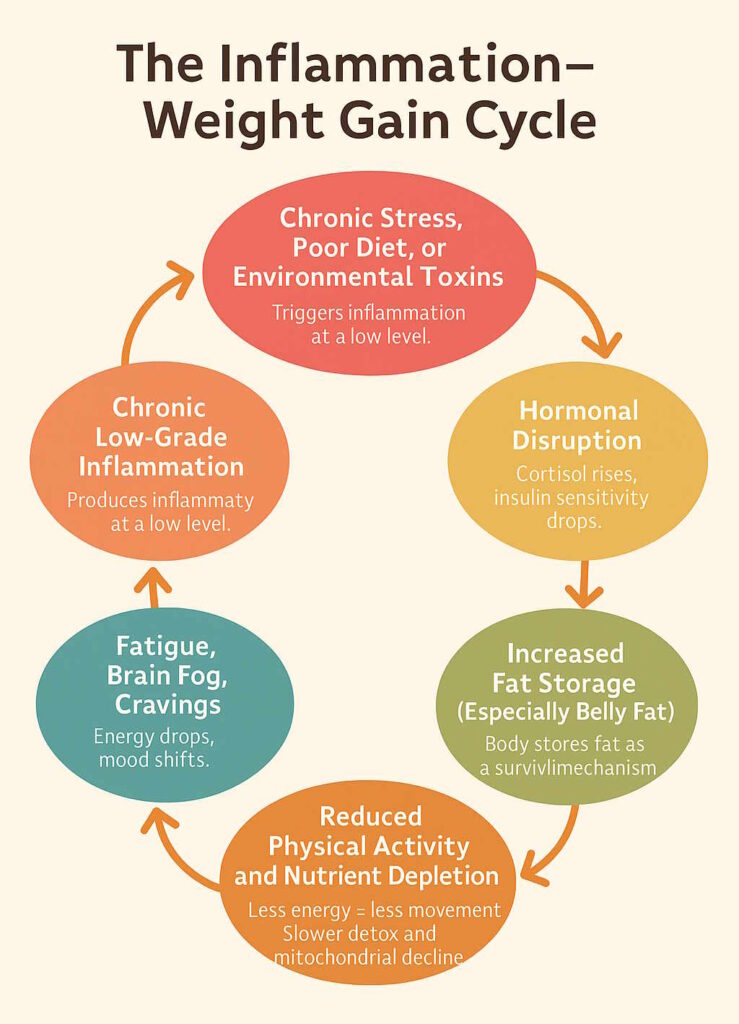
But when the body is constantly fighting off perceived threats—from ultra-processed foods, stress, pollution, hidden infections, or even unresolved trauma—it can switch into a kind of “emergency mode” that never quite turns off. That’s chronic inflammation, and it can quietly sabotage your health over time.
Harvard Health Blog explains this well in their article on the hidden dangers of chronic inflammation:
Harvard: Inflammation and Chronic Disease
How It Blocks Weight Loss
You might be eating well and moving more, but your body is still struggling. If chronic inflammation is involved, here’s what could be happening:
- It can disrupt hormone signalling, especially insulin, leading to blood sugar imbalance and fat storage.
- It may stress the adrenal system, increasing cortisol and triggering cravings for sugar or salty snacks.
- It can reduce leptin sensitivity, the hormone that tells you when you’re full.
- It puts pressure on the mitochondria, making you feel more tired and sluggish, less able to exercise or cook nourishing meals.
A study published in The Journal of Clinical Investigation found that inflammation in fat tissue contributes to insulin resistance, one of the key reasons people struggle with weight loss.
Study: Inflammation and Insulin Resistance
Signs You Might Be Inflamed
Chronic inflammation is often invisible, but it still sends clues. You might notice:
- Persistent fatigue or brain fog
- Feeling puffy or swollen
- Stubborn fat around the belly
- Mood swings or irritability
- Food sensitivities or digestive issues
- Sleep trouble, especially waking between 2–4am
- Skin flare-ups: eczema, acne, or rashes
- A sense that your body feels “inflamed” inside—even if tests are normal
This list from Cleveland Clinic offers more insight: Chronic Inflammation Symptoms & Causes
Chronic Inflammation and Hormonal Havoc
When inflammation is active, it throws off the balance of key hormones:
- Cortisol rises, leading to fat storage (especially in the abdomen).
- Insulin resistance can increase, making it harder to manage blood sugar.
- Thyroid function may slow down.
- Oestrogen and progesterone can become unbalanced, especially during perimenopause or menopause.
It’s not just about what you eat—it’s about what your body is fighting.
This in-depth review in Endocrine Reviews covers the inflammation-hormone-weight link beautifully:
Inflammation and Hormones Review
How to Cool the Fire Gently: Lifestyle Foundations
There’s no magic switch, but you can start turning the temperature down through your daily habits.
- Prioritise anti-inflammatory foods
Focus on greens, cruciferous veg, berries, omega-3 fats (flax, walnuts, oily fish), and spices like turmeric and ginger. - Reduce processed and inflammatory foods
Cut back on sugar, seed oils (like sunflower or corn), white flour, and ultra-processed snacks. - Move your body gently but consistently
Walking, yoga, and swimming – all support circulation and reduce inflammation.
This NIH article explains how physical activity helps modulate inflammation:
How Physical Activity Reduces Inflammation - Get restful sleepSleep helps regulate cortisol and inflammation. Aim for 7–9 hours if you can.
- Support your gut health
A balanced microbiome is key. Eat fermented foods, prebiotics (onions, garlic), and aim for 20–30 different plant foods a week. For more on this, see Nature Reviews: Gut Health and Inflammation - Manage stress
Chronic stress = chronic inflammation. Try breathwork, journaling, therapy, or time in nature—even 10 minutes can make a difference. - Stay hydratedWater helps flush out inflammatory waste and supports all detox organs.
- One More – Supportive StepIf you’re feeling inflamed and sluggish, your lymphatic and detox systems might also need support. That’s why I created the Far Infrared Mineral Clay Detox Wrap Course. It combines far infrared heat, mineral-rich clays, and gentle guidance to reduce puffiness, support circulation, and help you feel lighter and more energised.
Final Thoughts
Chronic inflammation might be invisible, but its effects on metabolism and weight are very real. If you’ve been stuck, tired, or frustrated, know that your body may simply be dealing with an internal fire. And the good news? With the right lifestyle shifts, that fire can be soothed—gently, naturally, and without harsh interventions. You don’t need to push harder. Just support your body in cooling down, balancing out, and finding its natural rhythm again.
In the next post, we’ll look at a powerful organ that rarely gets enough credit when it comes to weight loss: your liver. Stay tuned!

